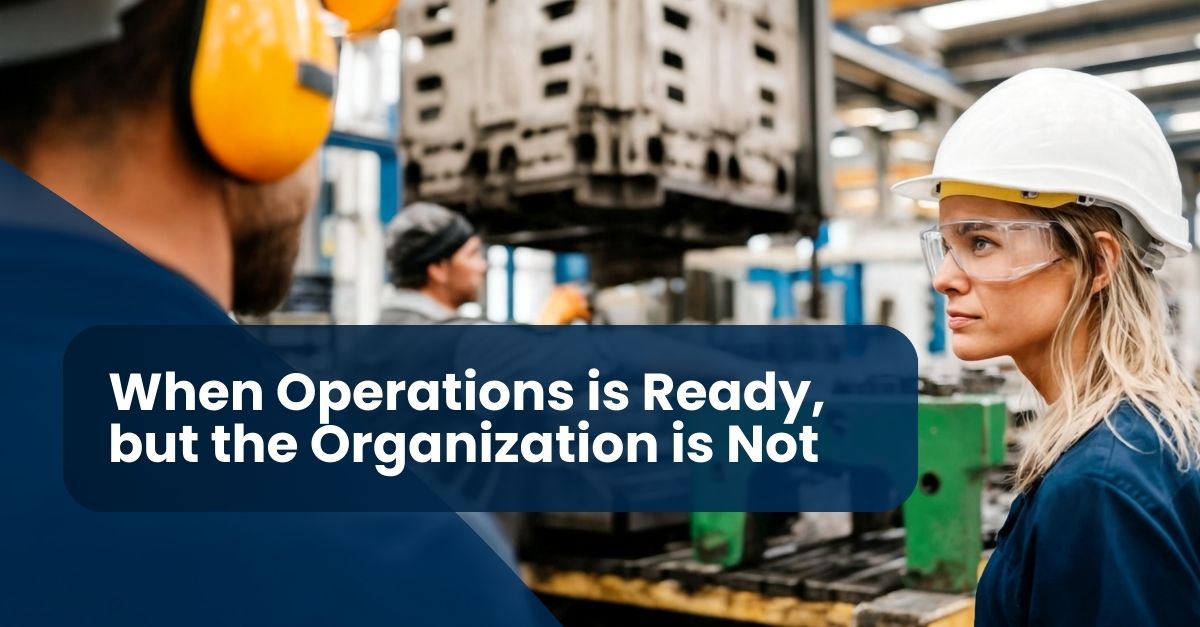
From the shop floor, performance looks strong. Capacity utilization is up. Throughput is improving. Unplanned downtime has been reduced. Schedules are largely holding. Orders are shipping, and customer satisfaction is generally positive.
These are the visible outcomes of disciplined execution and hard-earned stability. This is what progress looks like.
And yet, despite these gains, production continues to be disrupted. Not constantly, but persistently. Events occur that derail a system that is otherwise running well. The line has not failed, and the discipline has not disappeared. What has changed is the system’s sensitivity.
The Paradox of a Well-Running Operation
As operations stabilize and output increases, the system becomes tighter by design. Buffers shrink, tolerances narrow, and decision timing matters more. Small deviations that once went unnoticed now surface immediately and carry disproportionate impact.
In this environment, disruptions are no longer absorbed quietly. They are amplified. When production is running near its limits, execution is no longer protected by excess capacity or time. Stability exposes where the organization has not yet adapted to the new operating reality.
Where Momentum Is Quietly Undermined
Once execution improves, the primary threats to momentum often originate outside direct line control.
Quality systems that were sufficient at lower run rates begin to show strain as processes drift under sustained load. Tolerances tighten, and feedback loops that were once adequate become too slow. Rework and scrap increase, not because quality standards dropped, but because monitoring and response were never recalibrated for higher throughput.
Maintenance is another common fault line. Assets are pushed harder, yet preventive maintenance plans, spare parts strategies, consumable stocking levels, and staffing assumptions remain anchored to historical production levels. Without explicit alignment to new run-rate expectations, response times lengthen and downtime erodes gains faster than leaders expect.
Sales-driven exceptions also multiply in this phase. Large customers request expedited shipments. Special configurations are approved. Commitments are made with good intent but without real-time visibility into constraints.
Engineering and IT frequently introduce disruption unintentionally. New systems, automation, equipment, analytics tools, or software platforms are deployed into live operations without sufficient parallel runs, controlled pilots, or validation under full production load. Cutovers happen too quickly, integration risks are underestimated, and change management focuses on implementation rather than operational impact. These initiatives are often presented as investments to support growth, but in practice, they introduce variability precisely when the system is least able to absorb it.
External factors compound the issue further. Regulatory changes, supplier disruptions, compliance requirements, and environmental events do not pause simply because execution has improved. In a tighter system, their impact is magnified.
None of these issues reflects poor intent. They reflect misalignment.
The Hidden Cost of Success
There is an uncomfortable truth at this stage. Often, the reward for a well-run operation is more demand, more tools, more initiatives, and more expectations, introduced faster than the operating system can safely absorb them. Leadership asks what the operation needs now that performance is improving. Wish lists are created. Capital is allocated. New technology is approved. Additional programs are launched.
Without a disciplined plan for integrating, testing, and sequencing these changes, the very investments intended to fuel momentum begin to destabilize it. No plan to scale is, in practice, a plan to fail.
Why These Problems Appear After Stability Is Achieved
These breakdowns are confusing because the floor is doing exactly what it was asked to do. The systems are functioning, the routines are established, and the discipline is visible.
What has not kept pace is organizational execution discipline beyond operations. As performance improves, the operating system becomes more sensitive. That sensitivity is not a weakness. It is the natural result of efficiency. But when cross-functional behaviors, decision rules, and change controls do not evolve accordingly, they introduce shocks that the system was never designed to withstand at higher output levels.
This Is an Organizational Readiness Issue
Momentum is not sustained by operations alone. It requires maintenance, quality, engineering, IT, sales, and leadership to operate with the same level of discipline, timing, and respect for cadence as production itself.
Maintenance must align with new asset utilization realities. Quality must tighten detection and response under load. Engineering and IT must introduce change through controlled pilots and parallel runs. Sales must operate within visible capacity constraints. Without this alignment, operations is forced to compensate for the variability it does not control.
What Leaders Must Reinforce Next
At this stage, leadership is not about driving harder. It is about governing smarter.
Leaders must implement structured processes to introduce changes through scheduled cadences, not ad hoc interruptions. Require cross-functional decisions to adhere to current operational constraints. Ensure exceptions are promptly visible, openly discussed, and proactively managed. Validate and phase in new resources with real operational pilots before full roll-out.
The focus now must be on whether the organization can consistently maintain the high level of cross-functional discipline required to support and scale improved operational performance—not simply on the line’s capabilities.
Momentum Depends on Organizational Foresight
The disruptions that derail high-performing operations are rarely surprises. They are known risks that were once absorbed quietly and now surface because the system is finally doing what it was designed to do.
Organizations that sustain momentum anticipate these pressures, plan for them, and reinforce execution discipline beyond the shop floor. At higher levels of performance, execution is only as strong as the weakest interface surrounding it.
About POWERS
POWERS helps manufacturers protect and scale hard-fought operational gains by anticipating and addressing the organizational factors that quietly erode momentum as performance improves.
Our work begins where execution is actually created, at the shift and line level. We partner side by side with leadership teams to diagnose execution loss, strengthen daily management routines, and reinforce the behaviors required to perform under pressure.
POWERS designs and implements disciplined Management Operating Systems that bring clarity to priorities, accountability to action, and consistency to execution. We coach frontline supervisors and leaders in real operating conditions, ensuring stability holds as demand and complexity increase.
DPS, our Digital Production System, supports this work by providing a single, trusted source of real-time performance visibility. DPS makes the metrics that matter visible across shifts and functions, enabling faster decisions, stronger follow-through, and sustained accountability as organizations move from stability to momentum.
When rising demand tests your operation, the POWERS team works holistically across systems, processes, and leadership execution to build an organization capable of sustaining performance at scale.
- Speak to an Expert: Call +1 678-971-4711
- Email Us: info@thepowerscompany.com
- Request an Assessment: Visit our online contact form to schedule an assessment with our expert consultants.