The conversation is understandable. Elite talent is often what draws people to the game. The world’s best players possess extraordinary skill, creativity, speed, and decision-making ability. They can change the outcome of a match in a single moment.
Yet history suggests that talent alone rarely determines who lifts the trophy.
The World Cup is filled with examples of highly talented teams that entered the tournament with enormous expectations only to fall short. On paper, they appeared superior. Their rosters were loaded with star players. Analysts predicted deep tournament runs. But once the competition began, something else mattered just as much as individual ability.
The teams that consistently advance are usually the ones that combine talent with structure, discipline, communication, and execution. They understand how to play together. They understand their roles. They respond effectively when conditions change. They maintain standards when pressure rises. Most importantly, they operate within a system that allows talent to perform consistently rather than sporadically.
Manufacturing operates under the same reality.
The Difference Between Potential And Performance
Most manufacturing organizations are not short on potential.
Potential exists in the strategy developed by leadership. It exists in the capital investments made to improve operations. It exists in the equipment installed on the floor. It exists in the experience of the workforce and the expertise of frontline leaders. Potential can be found in business plans, budgets, forecasts, and performance targets.
Many organizations possess the resources necessary to succeed yet struggle to consistently achieve the results they expect. They have capable people, modern equipment, sufficient capacity, and ambitious goals. Despite those advantages, performance remains inconsistent. Results fluctuate from shift to shift, department to department, or facility to facility.
When this happens, the instinct is often to look for additional resources. More people. More technology. More equipment. More investment.
Sometimes those things are necessary. Often they are not.
In many cases, the issue is not the availability of resources. The issue is whether the organization has developed the systems necessary to convert those resources into performance.
Why Talent Alone Is Not Enough
Manufacturing leaders understand the value of strong people. Every operation depends on talented supervisors, experienced operators, skilled technicians, and capable managers. Organizations should absolutely invest in recruiting, developing, and retaining great talent.
The mistake occurs when talent becomes the operating strategy.
Many organizations unknowingly rely on individual effort to compensate for weaknesses elsewhere in the operation. Strong employees develop workarounds. Experienced supervisors solve problems through personal knowledge. High performers carry more than their share of the load. Results are achieved because talented individuals continuously bridge gaps that should not exist in the first place.
For a period of time, this approach can work.
Eventually, however, the limitations become visible. Performance becomes dependent on specific individuals. Variability increases when key people are absent. Growth creates complexity that personal heroics can no longer overcome. Problems that were once manageable become recurring obstacles.
Talent can create moments of excellence.
Systems create consistency.
What Winning Organizations Do Differently
The highest-performing manufacturers rarely depend on exceptional effort alone. Instead, they create operating environments that allow good people to perform at a high level every day.
Standards are clearly defined. Expectations are understood. Performance is visible. Communication follows a consistent rhythm. Problems are identified quickly and addressed before they become larger disruptions. Leaders spend less time reacting and more time managing. Accountability exists throughout the organization because everyone understands what success looks like and how performance will be measured.
These practices are not particularly glamorous. They rarely generate headlines. They are often overshadowed by discussions about technology, automation, labor availability, or capital investment.
Yet these disciplines are frequently the difference between organizations that consistently achieve results and those that struggle to sustain them.
The World Cup offers a useful reminder of this principle. The teams that perform best under pressure are rarely improvising. They rely on systems developed long before the tournament began. Training, communication, preparation, and role clarity create the foundation that allows talent to perform when the stakes are highest.
Manufacturing performance follows a similar pattern. Organizations do not suddenly become disciplined when conditions become difficult. They rely on systems and habits that were established long before the pressure arrived.
Execution Is The Ultimate Differentiator
Throughout this reindustrialization series, we have explored several themes shaping the future of American manufacturing. We have discussed strategy, technology, leadership, labor, and capability. Each plays an important role in organizational success. Each contributes to performance.
None of them, however, guarantee results.
Results are ultimately determined by execution.
Execution is what converts strategy into action. It is what turns leadership into daily discipline. It is what transforms equipment into output and labor into productivity.
Execution is how organizations translate potential into measurable business performance.
This is why systems matter.
Systems create clarity. Systems create accountability. Systems create consistency. Systems allow organizations to perform under pressure without depending entirely on individual heroics. They make performance repeatable.
The manufacturers that consistently outperform are not always the organizations with the most resources, the newest facilities, or the largest investments. More often, they are the organizations that have developed the ability to execute consistently regardless of the challenges they face.
Talent remains important. It always will.
But talent reaches its full value only when it operates inside a system capable of turning potential into performance.
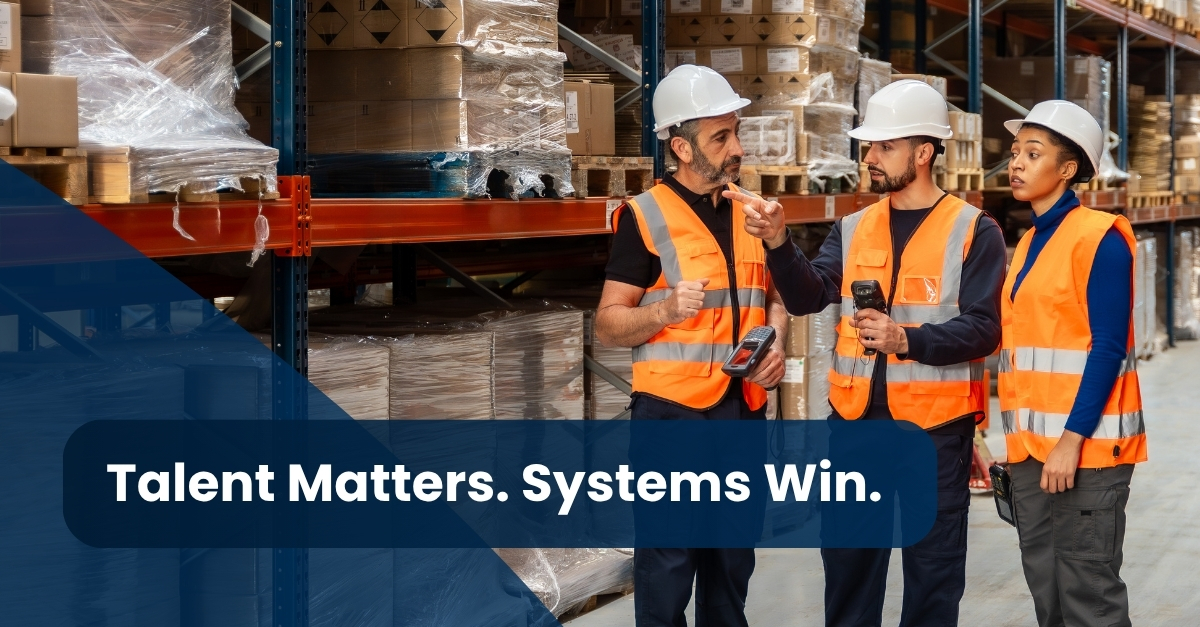
Talent matters. Systems win.
How POWERS Fits In
At POWERS, we help manufacturers build the systems that support sustainable execution. Through leadership development, management operating systems, continuous improvement, and DPS, our Digital Production System, we help organizations create the structure, accountability, visibility, and discipline required to consistently convert potential into performance.
About POWERS
POWERS helps manufacturers improve operational performance through frontline leadership development, management operating systems, continuous improvement, and DPS, our Digital Production System. By aligning people, processes, and performance, we help organizations achieve sustainable operational excellence and measurable business results.
Speak to one of our expert consultants to schedule an assessment.
- Speak to an Expert: Call +1 678-971-4711
- Email Us: info@thepowerscompany.com
- Request an Assessment: Visit our online contact form to schedule an assessment with our expert consultants.